Unveiling the Art of Stamping in Manufacturing

Metal stamping process with coiled metal sheets.

Stamping, a versatile manufacturing process, plays a crucial role in shaping metals to create a myriad of components. From simple to intricate designs, stamping is a cost-effective and efficient method widely utilized across various industries. Let’s delve into the world of stamping and explore how this technique contributes to the manufacturing landscape.

The Basics of Stamping:

At its core, stamping involves the use of a press machine and a die to transform flat sheet metal into desired shapes. The process encompasses several techniques, including punching, blanking, bending, coining, embossing, and flanging. Each technique serves a unique purpose, offering manufacturers the flexibility to craft a diverse range of parts.

Efficiency in Production:

One of the primary advantages of stamping is its efficiency in high-volume production. Once the tooling is in place, the process becomes remarkably swift, with large quantities of parts being manufactured quickly and consistently. This efficiency not only reduces production time but also lowers the cost per part, making stamping an economically viable choice for mass production.

Consistent Quality:

Stamping ensures consistent quality across all produced parts. The use of precise dies and molds guarantees uniformity, meeting stringent specifications and maintaining high-quality standards. This reliability in producing identical parts is paramount for industries where precision is non-negotiable.

Versatility in Materials:

Stamping is not limited to a specific type of metal; it accommodates a wide range of materials, including stainless steel, aluminum, and various steel grades and alloys. This versatility allows manufacturers to choose the material that best suits the requirements of the intended application, enhancing the functionality and durability of the stamped parts.

Cost-Effectiveness:

Stamping stands out as a cost-effective manufacturing solution. Once the initial tooling is set up, the cost per stamped part decreases significantly. This affordability makes it an attractive option for businesses looking to optimize their production processes without compromising on quality.

Conclusion:

Stamping in manufacturing is a true testament to the marriage of efficiency, precision, and versatility. Whether creating intricate components or large quantities of simple parts, stamping remains a go-to method for many industries. Its ability to offer cost-effective, high-quality solutions ensures that stamping will continue to be a cornerstone of modern manufacturing processes.

Robotic Welding: Revolutionizing Manufacturing with Productivity and Precision

Welder performing MIG welding on metal components in a shop.

In the fast-paced world of manufacturing, staying ahead of the competition often hinges on innovation and efficiency. Robotic welding has emerged as a true game-changer in the industry, offering manufacturers an unprecedented level of productivity and consistency in their projects. Let’s dive into how this transformative technology is reshaping the landscape of manufacturing.

Unleashing Productivity:

Robotic welding is all about streamlining the manufacturing process. By automating the welding operation, manufacturers can significantly boost productivity. Robots work tirelessly, 24/7 if needed, without breaks or fatigue. This means projects can progress rapidly, meeting tight deadlines and increasing overall output.

But it’s not just about speed. Robotic welding systems are highly efficient. They utilize advanced programming and state-of-the-art sensors to optimize the welding process. This ensures that every weld is precise and consistent, reducing the need for rework and saving valuable time and resources.

Precision on a New Level:

Consistency in welding is vital for the structural integrity and quality of the end product. This is where robotic welding truly shines. Robots are incredibly precise, following programmed instructions with micrometer-level accuracy. Whether it’s welding intricate components or handling repetitive tasks, robots maintain consistency from the first weld to the last.

Moreover, robotic welding minimizes human error. Skilled welders are invaluable, but even the most talented professionals can encounter fatigue or distractions. Robots, on the other hand, execute each weld with unwavering precision, ensuring that every project meets the highest quality standards.

Enhancing Safety:

Safety is paramount in manufacturing, and robotic welding plays a pivotal role in this regard. By automating welding processes, manufacturers can reduce the exposure of human operators to hazardous conditions. Robots are designed to work in environments with high heat, sparks, and fumes, thus mitigating potential health risks.

Additionally, robotic welding systems are equipped with advanced safety features. They can detect anomalies in real-time and immediately shut down if necessary, preventing accidents and injuries. This commitment to safety is not only beneficial for workers but also helps manufacturers avoid costly setbacks due to workplace incidents.

Versatility and Adaptability:

Robotic welding solutions are highly versatile and adaptable to different manufacturing needs. They can be programmed to handle a wide range of welding applications, from simple to complex. Whether it’s automotive parts, aerospace components, or intricate assemblies, robots can be configured to excel in various domains.

Moreover, as manufacturing requirements evolve, robotic systems can be easily reprogrammed and reconfigured to accommodate new tasks and projects. This flexibility ensures that manufacturers can stay agile and competitive in a dynamic industry.

In conclusion, robotic welding is revolutionizing the manufacturing industry by enhancing productivity, precision, safety, and versatility. It’s not just about automation; it’s about delivering consistent, high-quality results while optimizing resources. For manufacturers seeking a competitive edge and aiming for excellence in their projects, robotic welding is indeed a game-changer that’s here to stay. Embrace the future of manufacturing with robotic welding solutions and experience the transformative power it brings to your projects.

Advantages of Nearshoring Manufacturing to Mexico

Boxes in Mexican factory

Nearshoring, the practice of relocating manufacturing operations closer to the home country, has gained popularity in recent years. Mexico, with its strategic location and competitive advantages, has emerged as a preferred nearshoring destination for companies worldwide. In this article, we will quickly highlight some of the benefits of nearshoring manufacturing to Mexico.

Proximity and Time Zone Advantage:

One of the significant benefits of nearshoring to Mexico is its geographical proximity to the United States and Canada, making it an ideal choice for companies based in North America. The shorter distance between Mexico and its northern neighbors reduces shipping times and transportation costs significantly. Additionally, being in the same or similar time zones facilitates better communication and collaboration between companies, streamlining operations and reducing response times.

Lower Labor Costs:

Mexico offers competitive labor costs compared to many other countries. While still providing skilled and motivated workers, the cost of labor in Mexico is generally lower than in the United States and Canada. This cost advantage allows companies to reduce production expenses without compromising on quality.

Skilled Workforce:

The Mexican workforce is known for its strong work ethic, technical expertise, and adaptability. The country has a well-established education system and technical training programs that produce skilled professionals in various fields, making it easier for companies to find the right talent for their manufacturing needs.

Favorable Trade Agreements:

Mexico has an extensive network of trade agreements, including the United States-Mexico-Canada Agreement (USMCA), which replaced NAFTA (North American Free Trade Agreement). This agreement has created a stable and predictable trading environment, eliminating most tariffs on goods and promoting cross-border commerce. Nearshoring to Mexico enables companies to access these favorable trade conditions and expand their market reach.

Improved Supply Chain Efficiency:

By nearshoring to Mexico, companies can reduce supply chain complexities and risks. Shorter shipping distances lead to faster delivery times and lower transportation costs. Manufacturers can also respond more swiftly to changing market demands, as production facilities are closer to their customers.

Enhanced Intellectual Property Protection:

Intellectual property protection is a vital consideration for businesses operating globally. Mexico has strengthened its legal framework to safeguard intellectual property rights, providing companies with greater confidence when investing in the country.

Infrastructure and Technology:

Mexico boasts modern infrastructure and access to advanced technology, particularly in major industrial regions. With several well-developed industrial clusters, companies can find specialized facilities, research centers, and logistics services to support their manufacturing operations effectively.

Conclusion:

Nearshoring manufacturing to Mexico offers numerous advantages for companies looking to optimize their production processes, reduce costs, and improve supply chain efficiency. The country’s geographical proximity, competitive labor costs, skilled workforce, favorable trade agreements, and strong infrastructure make it an attractive option for businesses in North America and beyond. By leveraging these benefits, companies can position themselves for success in the global market while fostering economic growth and development in Mexico.

Understanding Forging in Manufacturing: Creating Strong and Durable Products

Forging in Manufacturing: Creating Strong and Durable Products

Have you ever wondered how some everyday objects, like wrenches, bolts, or car parts, are made to be so sturdy and durable? One of the key manufacturing processes behind such robust products is called forging. Let’s take a closer look at what forging is and how it works in simple terms.

What is Forging?

Forging is a special manufacturing technique used to shape metal materials into different forms by applying force and heat. It is an ancient method that has been refined over thousands of years and is still widely used today in various industries like automotive, aerospace, construction, and more.

How does Forging Work?

Imagine you have a piece of metal that you want to turn into a specific shape, like a strong and reliable wrench. In the forging process, the metal is first heated until it becomes red-hot but not melted. This high temperature makes the metal softer and more malleable, so it can be shaped more easily.

Next, the red-hot metal is placed on a strong surface called an anvil. Skilled workers, called blacksmiths or forgers, use a special tool, like a hammer or a mechanical press, to apply force and shape the metal. They strike the metal with precise and powerful blows, slowly molding it into the desired shape.

Types of Forging:

There are different types of forging techniques used based on the intended shape and purpose of the final product:

  1. Open-Die Forging: The metal is placed between two flat dies and hammered repeatedly until it takes the desired shape. This technique is often used for large, simple-shaped parts like shafts or blocks.
  2. Closed-Die Forging: Also known as impression-die forging, this method involves using dies with specially designed cavities to shape the metal into complex forms. It is commonly used to produce parts with intricate details.
  3. Upset Forging: In this technique, the length of the metal is increased while its cross-section is decreased. It is used to create parts like bolts, rivets, and axles.
  4. Press Forging: Instead of using a hammer, this method employs hydraulic or mechanical presses to apply force. It is suitable for producing parts with consistent shapes and dimensions.

Why is Forging Important?

Forging is crucial for creating products that require high strength, reliability, and durability. The process aligns the metal’s internal grain structure, making it more resistant to cracks and defects. Forged parts can withstand heavy loads, extreme temperatures, and harsh conditions better than those made by other manufacturing methods like casting or machining.

In summary, forging is a time-tested manufacturing process that involves shaping metal by applying heat and force. It is essential for producing strong and dependable products used in various industries. So, the next time you use a sturdy tool or drive a car with reliable parts, you’ll know that forging played a vital role in making them that way.

Casting: Shaping the Future

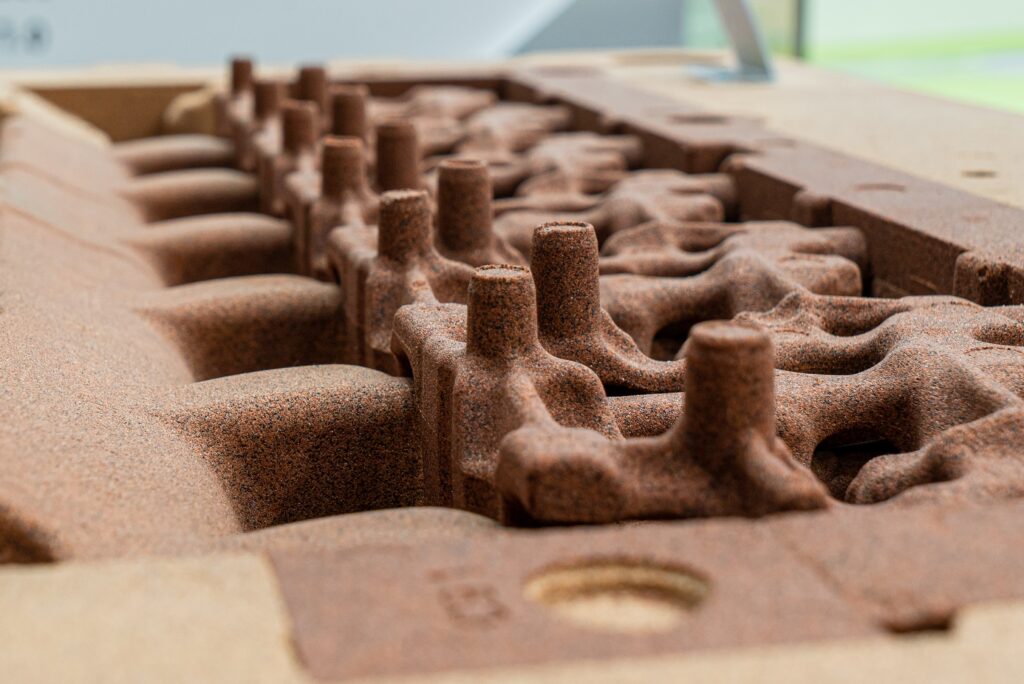
Casting Manufacturing ProcessCasting is a fascinating manufacturing process that has been around for centuries, allowing us to shape metals and other materials into a wide variety of forms. In simple terms, casting involves pouring molten material into a mold and letting it solidify to create a desired shape. Let’s explore this process and its key elements.

  1. Pattern Creation: The first step in casting is creating a pattern, which serves as a template for the final product. Patterns can be made of wood, plastic, or metal and are designed to replicate the shape and features of the desired object.
  2. Mold Preparation: A mold is created by packing a special material, often made of sand or plaster, around the pattern. The mold is divided into two halves, called the cope and drag, which fit together to form a cavity. Additional channels and vents are also included to allow for the flow of molten material and the escape of gases.
  3. Melting and Pouring: The chosen material, typically metal such as iron, steel, aluminum, or bronze, is melted in a furnace at high temperatures. Once molten, it is carefully poured into the mold through the channels, filling the cavity completely.
  4. Solidification: As the molten material fills the mold, it begins to cool and solidify. The cooling process determines the final characteristics of the casting. Different cooling rates and techniques can be employed to achieve specific properties like strength, hardness, or dimensional accuracy.
  5. Removal and Finishing: Once the material has solidified and cooled, the mold is removed to reveal the cast object. The casting may undergo post-processing steps, such as removing excess material (called gating and risers), cleaning, grinding, machining, and surface treatments, to achieve the desired final appearance and dimensional accuracy.

Casting offers several advantages in manufacturing. It allows for complex shapes and intricate details that may be challenging to achieve through other processes. It also facilitates mass production by enabling the creation of multiple identical copies of an object.

Casting finds applications in various industries, including automotive, aerospace, construction, and art. From engine components to sculptures, casting provides the means to create objects with diverse sizes, shapes, and materials.

While traditional casting methods have been prevalent for centuries, advancements in technology have introduced new techniques like investment casting, die casting, and continuous casting, offering enhanced precision and efficiency.

Casting manufacturing is a remarkable process that enables the transformation of molten materials into solid objects of countless shapes and functions. It combines artistry, engineering, and innovation, contributing to the creation of products that shape our modern world.

Production vs. Manufacturing: What’s the Difference?

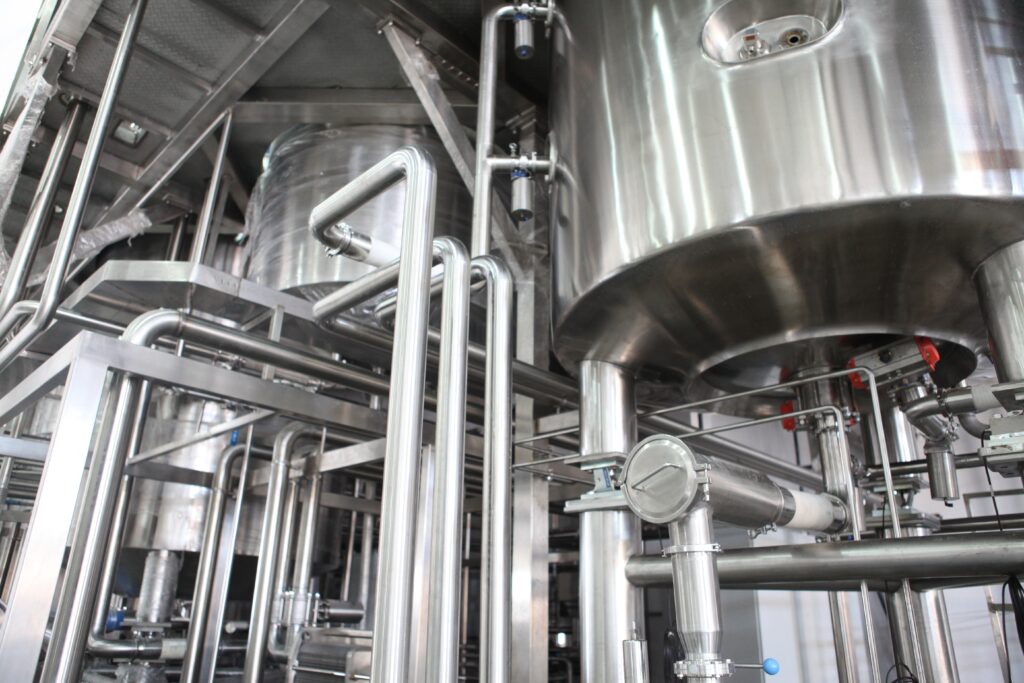
When it comes to making things, you may have come across the terms “production” and “manufacturing.” While they are often used interchangeably, there are subtle differences between the two. Let’s explore these concepts in basic terms to understand how they differ from each other.Factory machinery stainless steel pipes

Production refers to the overall process of creating goods or services. It encompasses all the activities involved in bringing a product or service to fruition, from the initial idea to its delivery to the customer. Production involves planning, organizing, and coordinating various resources to achieve a desired outcome.

On the other hand, manufacturing is a specific subset of production. It focuses on the physical transformation of raw materials into finished goods. Essentially, manufacturing is the hands-on process of making products through specific techniques and machinery.

To better grasp the distinction, let’s break it down:

  1. Scope: Production has a broader scope, encompassing everything from ideation, design, marketing, and distribution to after-sales services. It involves managing the entire lifecycle of a product or service. Manufacturing, on the other hand, is a narrower concept that specifically deals with the physical creation of products.
  2. Activities: Production involves a wide range of activities, including research and development, marketing, sales, procurement, logistics, and customer support. It encompasses all the non-physical aspects of creating and delivering goods or services. Manufacturing, however, is primarily concerned with the actual fabrication and assembly of products.
  3. Focus: Production focuses on the overall efficiency, effectiveness, and profitability of the entire process. It aims to optimize resources, minimize costs, and ensure customer satisfaction. Manufacturing, in contrast, concentrates on the technical aspects of transforming raw materials into finished products, ensuring they meet quality standards and specifications.
  4. Applicability: Production is not limited to physical products. It also applies to services, such as healthcare, banking, education, or entertainment, where tangible goods are not the end result. Manufacturing, as a subset of production, specifically relates to the creation of physical goods.
  5. Integration: Manufacturing is often a crucial component within the broader production process. It is integrated with other functions like procurement, inventory management, and quality control to ensure a smooth and efficient production flow.

In summary, production is the overarching process that encompasses all the activities involved in creating and delivering goods or services, while manufacturing specifically focuses on the physical transformation of raw materials into finished products. Understanding this distinction helps us recognize the specific role that manufacturing plays within the larger production landscape.

Manufacturing: Making Things Happen

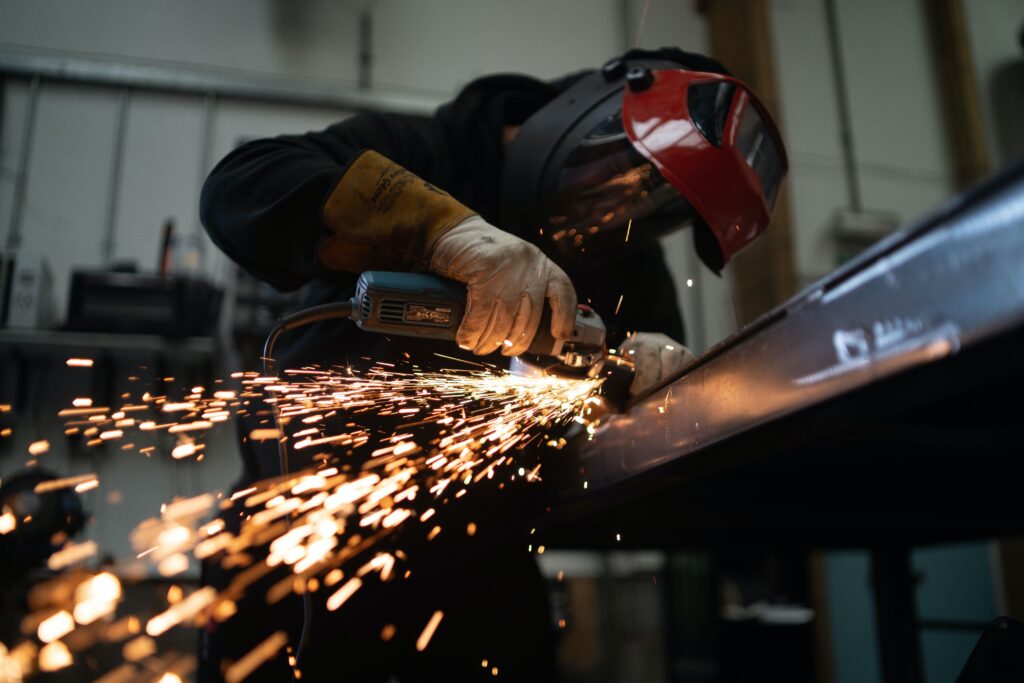
Worker grinding a piece of metal

Have you ever wondered how the products you use every day come into existence? How are smartphones, cars, or even a simple pencil manufactured? The answer lies in the fascinating world of manufacturing. In simple terms, manufacturing is the process of transforming raw materials into finished goods ready for use or sale.

Manufacturing involves a series of steps, each contributing to the creation of a final product. Let’s take a closer look at the basic stages involved in manufacturing:

  1. Design and Planning: It all starts with an idea. Engineers, designers, and product developers work together to conceive a product’s design and plan its production process. They consider factors like functionality, aesthetics, materials, and manufacturing techniques.

  2. Sourcing Raw Materials: Once the design is finalized, the next step is to gather the necessary raw materials. Raw materials can be natural resources like wood, metal, or plastic, or they can be synthetic materials produced through chemical processes. These materials are carefully selected based on their suitability for the product.

  3. Preparing the Materials: Raw materials typically undergo various processes to prepare them for manufacturing. This may involve cutting, shaping, molding, or refining the materials to the desired specifications. For instance, metal may be melted and cast into specific shapes, or wood may be cut and sanded.

  4. Assembly: In this stage, the individual components are brought together and assembled. Depending on the complexity of the product, this can involve automated machinery, skilled workers, or a combination of both. Parts are fitted, fastened, welded, or glued together to create the final product.

  5. Quality Control: Quality control is an essential aspect of manufacturing. Products undergo rigorous inspections and tests to ensure they meet specific standards. This may involve visual inspections, measurements, functional tests, and more. Any defects or issues are identified and addressed before the product moves forward.

  6. Packaging and Distribution: Once the product passes quality control, it is ready for packaging. Packaging serves to protect the product during transportation and provide information to the consumer. Once packaged, the products are distributed to warehouses, retail stores, or directly to customers, depending on the distribution strategy.

  7. Maintenance and Repair: Manufacturing doesn’t end once the product is sold. Many manufacturers also offer maintenance and repair services for their products. This ensures that customers can continue to use and enjoy their purchases for a long time.

Manufacturing plays a crucial role in our daily lives, providing us with the goods we rely on. From household appliances to clothing, from vehicles to electronics, manufacturing is behind the scenes, making things happen. The process requires expertise, precision, and coordination among various teams and technologies.

Moreover, manufacturing contributes to the economy by creating job opportunities and driving innovation. It allows us to continuously improve products, develop new technologies, and meet the ever-changing needs of society.

So, the next time you pick up a product, take a moment to appreciate the manufacturing journey it went through. From conception to creation, manufacturing breathes life into ideas and transforms them into tangible objects that enhance our lives.